The Steel Frame of India – All India Services & Nation Building
A nation is measured not only by its geography but by the efficiency, impartiality and resilience of its institutions. In post-independence India, the All India Services (IAS, IPS and IFoS) have served as the backbone of administration, ensuring cohesion between the Centre and states and bridging the gap between governance and citizens. Their contribution reflects how Sardar Patel’s vision continues to guide the functioning of a strong, unified and responsive nation.
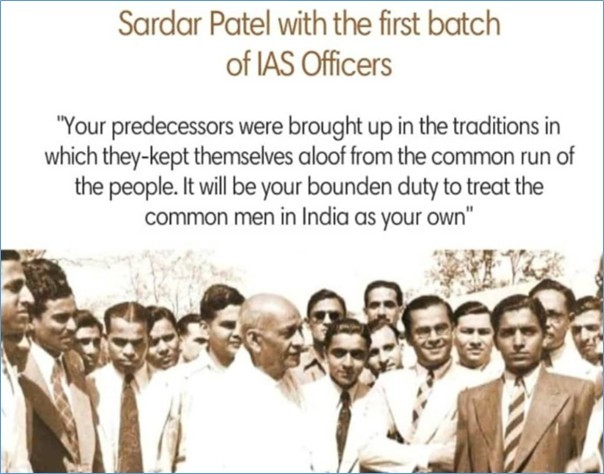
The Birth of the Steel Frame
Sardar Patel, recognizing the fragility of a newly independent nation, insisted on a professional, neutral and effective civil service. This “steel frame” would connect the Union with diverse states, implement policies equitably and maintain law and order while promoting economic and social development. Patel understood that political unity alone was insufficient: only strong institutions could translate principles into practical governance, sustaining peace and enabling growth.
Administrative Cohesion and Stability
All India Services officers are posted across districts and states, acting as the functional link between policy and people. From overseeing elections to implementing social welfare schemes, they uphold the rule of law, equity and national integration. Their presence in every district ensures that governance is not concentrated in urban centres alone, making every citizen a stakeholder in the national project. In many regions, officers take on additional roles in disaster response, local planning and social initiatives, reflecting the multi-dimensional impact of the steel frame.
Crisis Management and Nation Building
Whether it is natural disasters, civil unrest, or pandemics, All India Services officers provide continuity, coordination and leadership. Their ability to harmonize central directives with local realities allows India to withstand internal challenges and maintain unity in diversity. The resilience of the country during crises, from floods in Assam to earthquakes in Gujarat, demonstrates the indispensable role of these officers in stabilizing communities while ensuring the delivery of essential services.
Embedding National Values
Through training, administration and daily interaction with citizens, the All India Services cultivate a sense of shared responsibility and national purpose. Officers mediate between diverse groups, arbitrate disputes and ensure that policies are inclusive, thereby reinforcing both integration and trust in governance. This day-to-day work strengthens social cohesion, promoting respect for law, fairness and common purpose—values that underpin a unified nation.
Conclusion
The All India Services exemplify Patel’s belief that strong institutions are essential to a united India. They translate vision into action, policy into practice and ideology into tangible national cohesion. On Rashtriya Ekta Diwas, their contribution to nation building is as vital as any political or cultural effort. They ensure that the ideals of integration, fairness and national service remain alive across every corner of the country.
© 2026 Ekta Diwas