From the sweeping landscapes of the Himalayas to the deep forests of central India, from urban centres to remote border villages, the Central Armed Police Forces (CAPFs) operate silently yet decisively, ensuring that India’s unity is not merely aspirational but tangible. On Rashtriya Ekta Diwas, their contribution to nation building deserves careful attention, for the CAPFs embody the enduring principles of peace, security and cohesion that Sardar Vallabhbhai Patel sought for a newly independent India.
A Legacy of Order and Integration
Post-independence, India faced the colossal challenge of integrating over 560 princely states, unifying a country fragmented by centuries of feudal administration, colonial policy and local conflicts. While Sardar Patel laid the political and institutional framework for unity, it was the security forces and subsequently the CAPFs, that implemented the practical side of integration: maintaining law and order, supporting the administrative machinery and ensuring that no region became a weak link in the chain of nationhood. Their presence symbolized both authority and reassurance, projecting the idea that every citizen, regardless of location, was part of a single nation.
CAPFs as the Silent Backbone of Unity
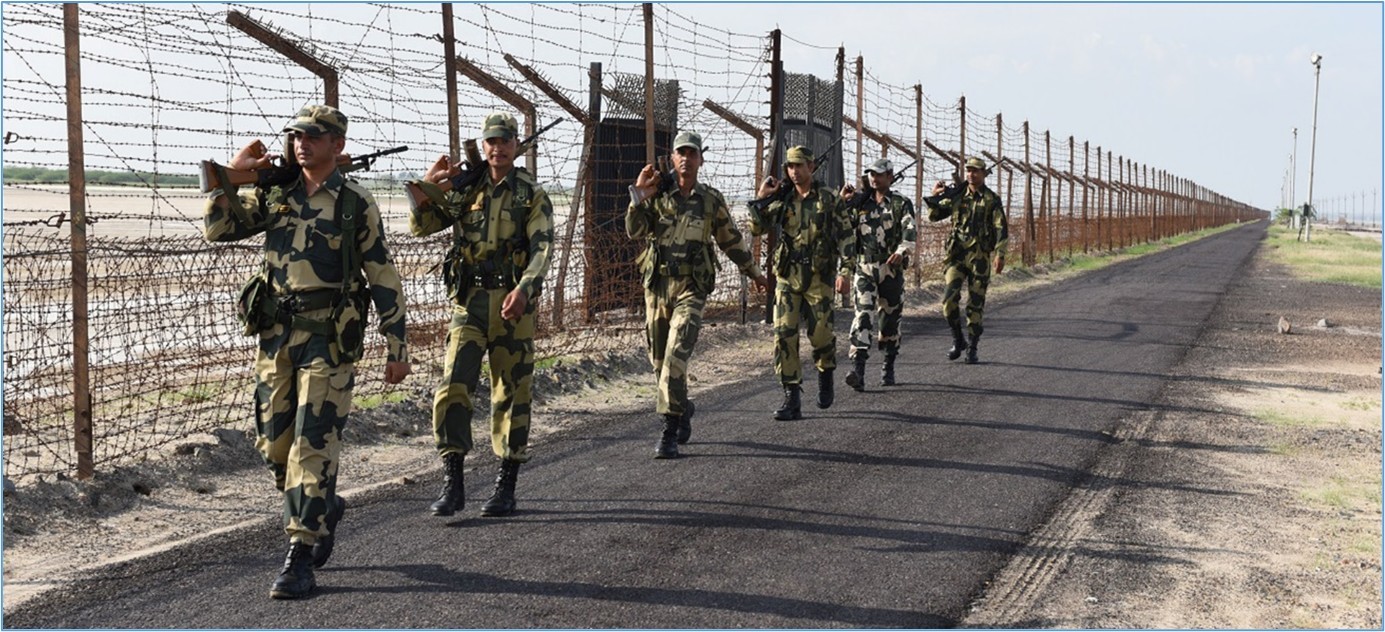
The CAPFs, including the BSF, CRPF, ITBP, CISF, Assam Rifles, NSG and SSB, serve not just as security providers but as nation-builders. They are deployed across internal security operations, disaster management, border protection and counter-insurgency tasks. By ensuring peace in sensitive regions, they create the conditions in which governance, economic activity and social cohesion can flourish. Their work extends beyond protection: CAPFs often assist in healthcare drives, vaccination campaigns and community development initiatives, embedding themselves in the very social fabric they protect.
Peace as Precondition for Development
Development cannot proceed in conflict zones. Areas facing insurgency, communal tension, or natural disasters require both the physical protection and psychological assurance provided by CAPFs. By securing borders, protecting communities and responding to emergencies, these forces safeguard the space in which democracy, commerce and development can operate. Their disciplined presence often transforms regions previously marked by unrest into centres of stability and progress, enabling local economies and social programmes to thrive.
CAPFs and National Identity
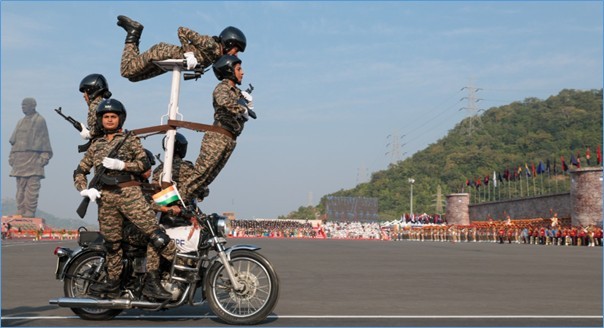
Beyond operational duties, CAPFs contribute to a shared national culture. National events, parades, Ekta Pledges and community outreach programmes conducted by these forces help foster citizenship consciousness and a sense of belonging across diverse regions. They are often the first interface between the state and citizens in far-flung areas, bridging gaps of trust and demonstrating the reach of India’s democratic framework. In this sense, CAPFs are not only enforcers of law but also custodians of national sentiment and cohesion.
Conclusion
The role of CAPFs extends beyond law enforcement. They are the guardians of unity, ensuring that India’s diversity strengthens rather than fragments the nation. On this Rashtriya Ekta Diwas, acknowledging their silent, constant and disciplined service is to recognise the practical foundations on which Sardar Patel’s vision of a united India rests. Their work reminds citizens that unity is not abstract, it is maintained daily through vigilance, discipline and dedicated service.
© 2026 Ekta Diwas